This is primarily a bug fix release to resolve issues from the last release that we wanted to get out before the holidays. This release also contains a number of performance improvements added in OrmLite to speed up your Data Access and AutoQuery results.
Other changes in this release include:
New OnSessionFilter
You can intercept sessions after they've been resolved from the cache and modify them before they're used in
ServiceStack or other application code by overriding OnSessionFilter() in your AppHost, e.g:
public override IAuthSession OnSessionFilter(IAuthSession session, string withSessionId)
{
    // Update User Session
    return base.OnSessionFilter(session, withSessionId);
}
This comes in useful when migrating existing sessions and populating properties with custom values.
Registered Type Filters on IAppHost
To make it easier for plugins to register Typed Filters , their Registration APIs are now available on IAppHost as well, e.g:
public interface IAppHost
{
    /// <summary>
    /// Add Request Filter for a specific Request DTO Type
    /// </summary>
    void RegisterTypedRequestFilter<T>(Action<IRequest, IResponse, T> filterFn);

    /// <summary>
    /// Add Request Filter for a specific Response DTO Type
    /// </summary>
    void RegisterTypedResponseFilter<T>(Action<IRequest, IResponse, T> filterFn);

    /// <summary>
    /// Add Request Filter for a specific MQ Request DTO Type
    /// </summary>
    void RegisterTypedMessageRequestFilter<T>(Action<IRequest, IResponse, T> filterFn);

    /// <summary>
    /// Add Request Filter for a specific MQ Response DTO Type
    /// </summary>
    void RegisterTypedMessageResponseFilter<T>(Action<IRequest, IResponse, T> filterFn);
}
RedisReact
New Windows, OSX, Linux binaries published and http://redisreact.servicestack.net Live Demo updated with this November Release:
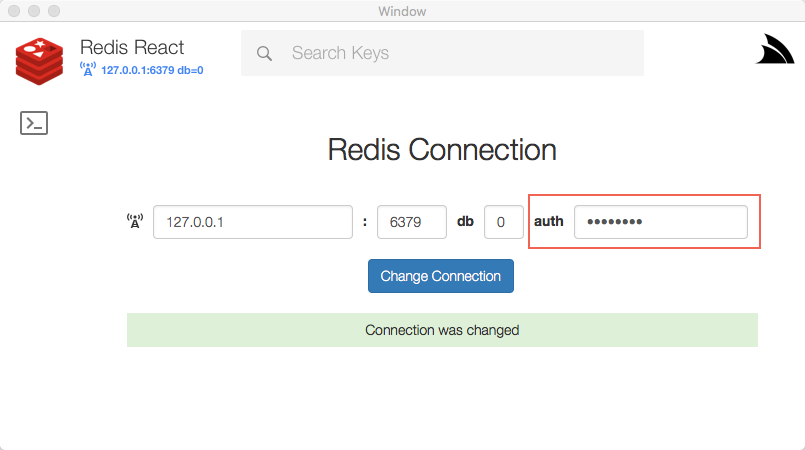
Connections with Authentication
Added support for password authentication when establishing connections with redis.
Custom key console links
The console link now populates the console with the most appropriate command for each key type, e.g. clicking console
ok a Sorted Set Key (ZSET) populates the Web Console with ZRANGE key 0 -1 WITHSCORES.
ServiceStack.Redis
RedisConfig.DefaultMaxPoolSize
You can easily configure the default pool size for RedisManagerPool and PooledRedisClientManager with
a global static configuration, e.g:
RedisConfig.DefaultMaxPoolSize = 200;
Changes:
The RedisManagerPool.MaxPoolSize property is now read-only to reflect proper usage where it needs to be
specified in the constructor otherwise it's ignored.
New Redis APIs
New API's added to typed Redis Client to make available API's to resolve cache key for specific types,
deprecate SetEntry* API's and replace them with more appropriately named SetValue*, allow typed API
to store and expire typed POCO's in 1 operation:
public interface IRedisClient
{
    //Resolve cache key for specific Type and Id
    string UrnKey<T>(T value);
    string UrnKey<T>(object id);
    string UrnKey(Type type, object id);
}

public interface IRedisTypedClient
{
    //resolve cache key used for a typed instance
    string UrnKey(T value);

    //Deprecate SetEntry* API's
    [Obsolete("Use SetValue()")]
    void SetEntry(string key, T value);
    [Obsolete("Use SetValue()")]
    void SetEntry(string key, T value, TimeSpan expireIn);
    [Obsolete("Use SetValueIfNotExists()")]
    bool SetEntryIfNotExists(string key, T value);

    //Replaces above SetEntry* API's
    void SetValue(string key, T entity);
    void SetValue(string key, T entity, TimeSpan expireIn);
    bool SetValueIfNotExists(string key, T entity);
    bool SetValueIfExists(string key, T entity);

    //Save and expire an entity in 1 operation
    T Store(T entity, TimeSpan expireIn);
}
ServiceStack.Text
To improve the usefulness of mocking HTTP Requests, the request body is now passed in the Results Filter so the Request Body can be inspected, e.g:
using (new HttpResultsFilter
{
    StringResultFn = (webReq, reqBody) =>
    {
        if (reqBody != null && reqBody.Contains("{\"a\":1}"))
            return "mocked-by-body";

        return webReq.RequestUri.ToString().Contains("google")
            ? "mocked-google"
            : "mocked-yahoo";
    }
})
{
    "http://yahoo.com".PostJsonToUrl(json: "{\"a\":1}") //= mocked-by-body

    "http://google.com".GetJsonFromUrl() //= mocked-google
    "http://yahoo.com".GetJsonFromUrl()  //= mocked-yahoo
}
Previously inspecting the Request Body was not possible. Thanks to @georgehemmings for adding this feature.